Container Port Group Mobile Application
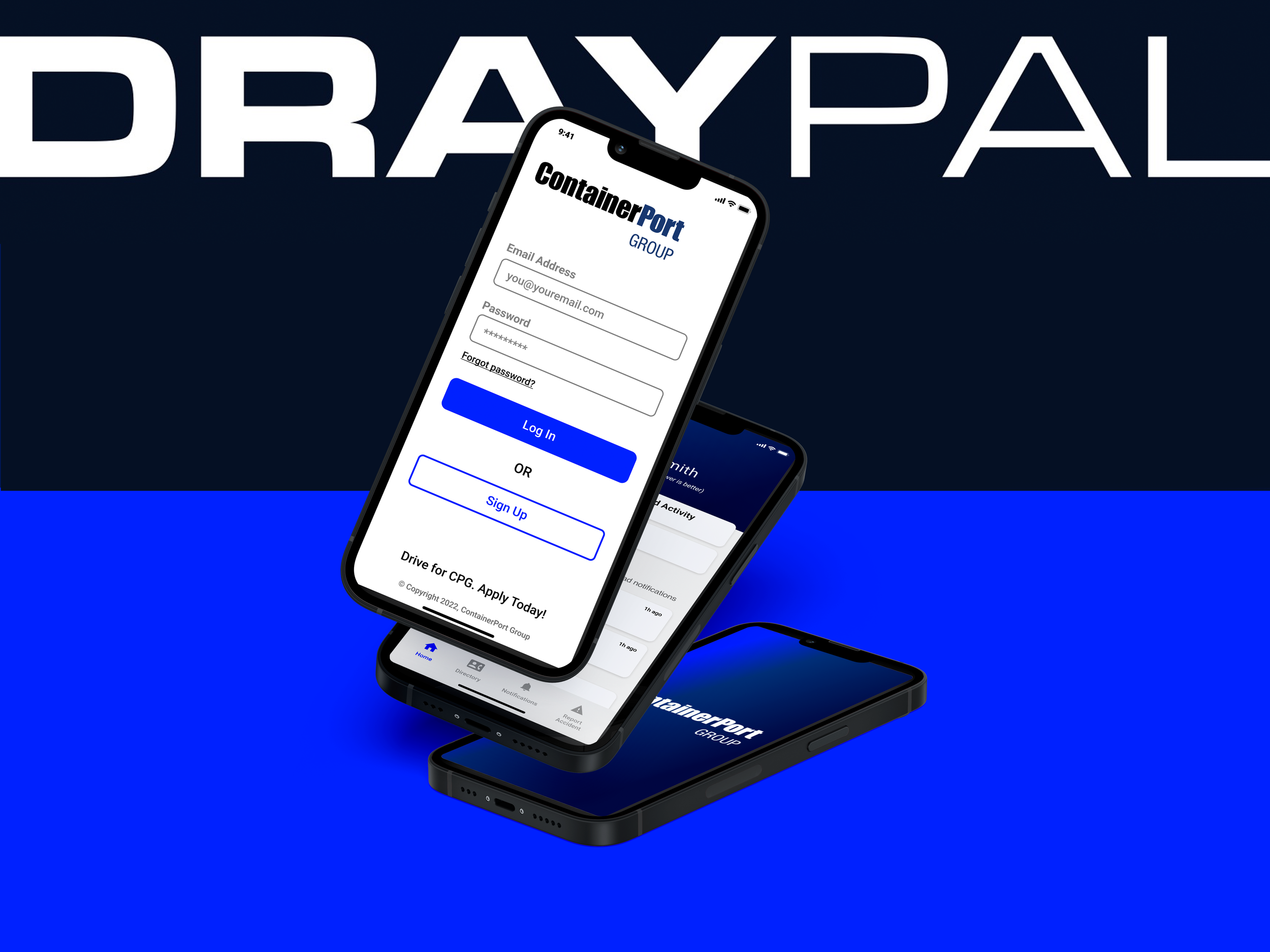
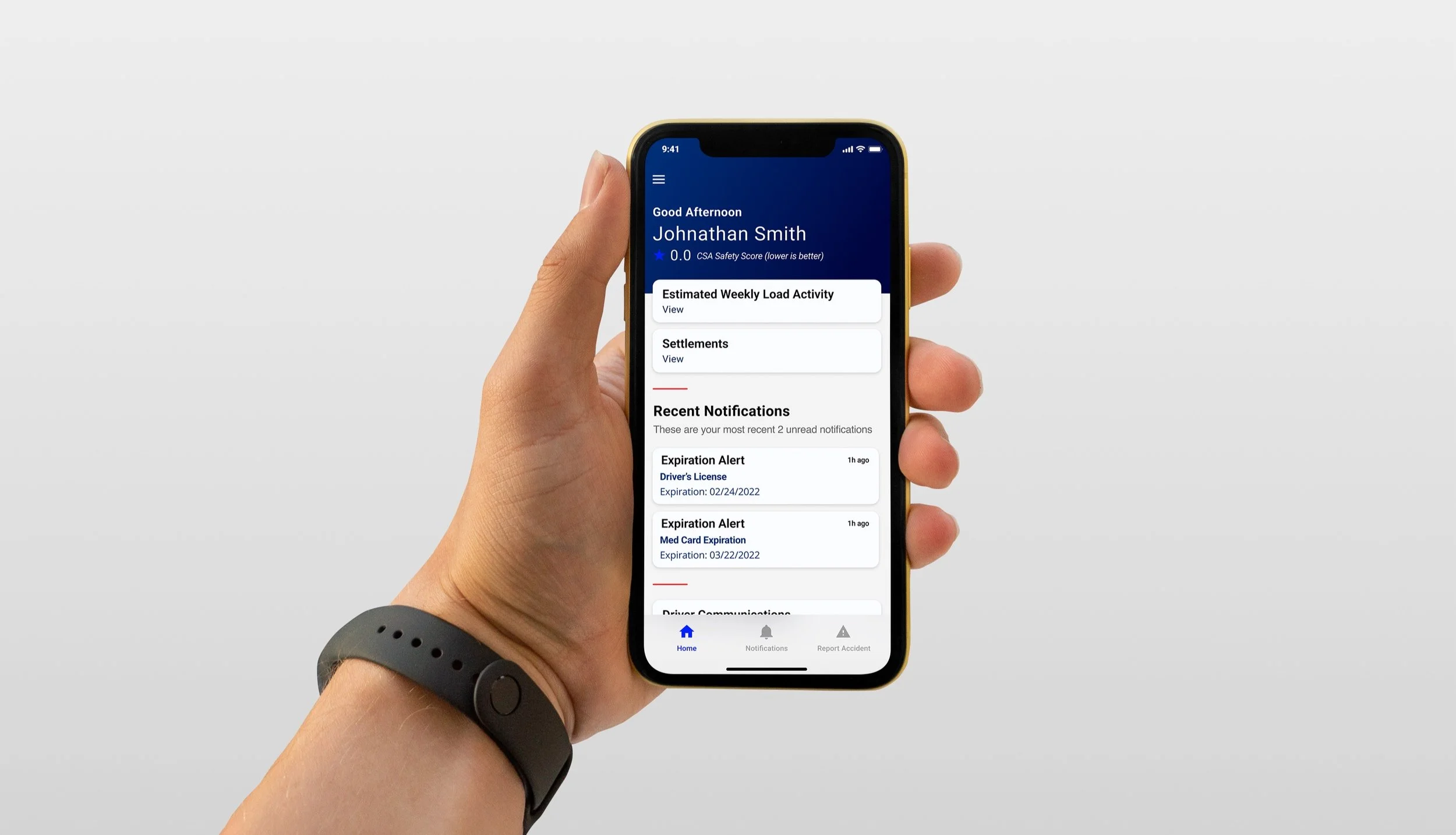
Our team designed and built a cross-platform mobile application for iOS and Android (React) that gives truck drivers and fleet owners real-time visibility into their work and earnings. The app centralizes critical information, daily jobs, activity tracking, expected pay, safety records, and license, insurance, and expiration details, into a single, easy-to-use experience.
PROJECT OVERVIEW
We designed and developed a driver-centric app that unified jobs, pay, safety, and compliance information into one seamless experience.
The Solution
The app improved operational transparency, gave drivers ownership over their data, and positioned ContainerPort Group as a leader in driver experience and retention.
The Impact
I led early UX research to gather requirements and understand driver needs, then transitioned into a product management role to guide the team from discovery through delivery of a Minimum Viable Product (MVP).
My Role
UX research · Product management · Human-centered design · Workshops · MVP definition
Tools & Methods
THE CHAllenge
The trucking industry faces ongoing challenges with driver retention, fragmented systems, and limited transparency. Drivers often rely on multiple tools to track jobs, pay, safety metrics, and compliance, creating friction and dissatisfaction in their day-to-day work.
Discovery & Research
Discovery focused on understanding the full trucking ecosystem. Through stakeholder mapping, persona development, and human-centered design workshops with the Driver Experience (DX) team, we uncovered key pain points and aligned priorities across drivers, fleet owners, and internal stakeholders.
I started by gathering crucial project requirements. Together with our team, we brought our vision to life by creating a Minimum Viable Product (MVP) mobile application. This app was meticulously designed to address the top-priority needs of truck drivers while setting the stage for future improvements and enhancements. As part of my role, I led human-centered design workshops for the Driver Experience (DX) team, with the goal of improving the day-to-day working experience for both truck drivers and fleet owners.
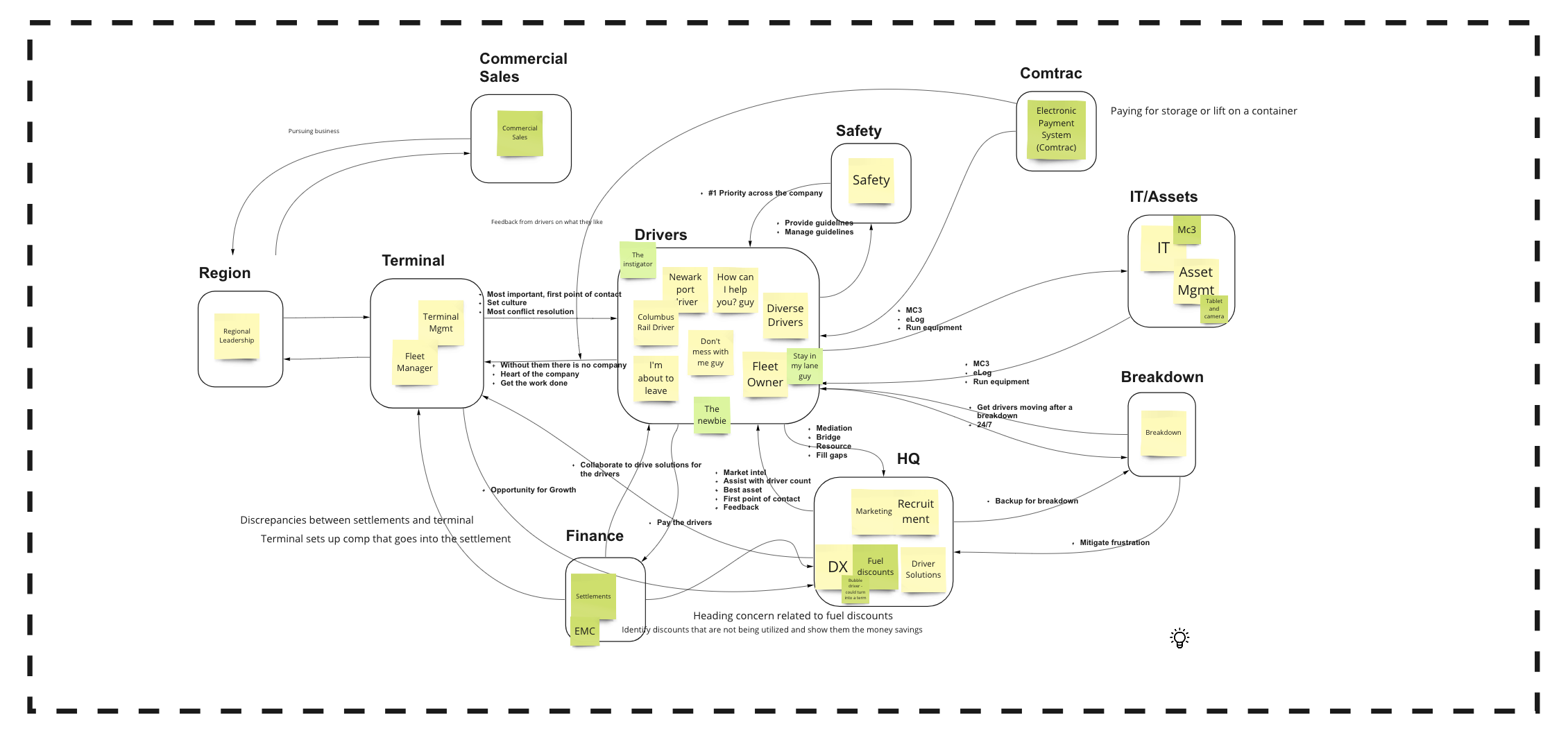
Stakeholder Mapping
During these workshops, we employed methods such as stakeholder mapping, persona creation, and the 5 Whys technique to surface root causes, align cross-functional perspectives, and ensure our solutions addressed real user needs and pain points.
Stakeholder mapping allowed us to identify and understand all the key entities involved in the trucking industry. By mapping out the stakeholders, we could create a comprehensive picture of the ecosystem, making it easier to address their unique needs.
Persona Creation
Persona creation was a crucial step in human-centered design. It enabled us to develop detailed and relatable user profiles representing both truck drivers and fleet owners. By understanding the goals, challenges, and motivations of these personas, we could design solutions that directly catered to their requirements.
These workshops were instrumental in laying the groundwork for user-centric solutions, and the methodologies we employed helped us empathize with the challenges and aspirations of truck drivers and fleet owners. The outcomes of these workshops informed our product development and ensured that our solutions were truly aligned with the needs of our users.
Following the creation of user personas for driver loyalty application, our next crucial step in ensuring a user-centric approach was to engage directly with the drivers themselves. To achieve this, we organized visits to terminals and conducted one-on-one interviews with truck drivers.
During these terminal visits, I interviewed truck drivers, carefully noting their responses on paper. The objective was to gain deep insights into their perspectives, challenges, and aspirations. These interviews were invaluable for understanding their experiences and for capturing their authentic voices.
SYNTHESIS
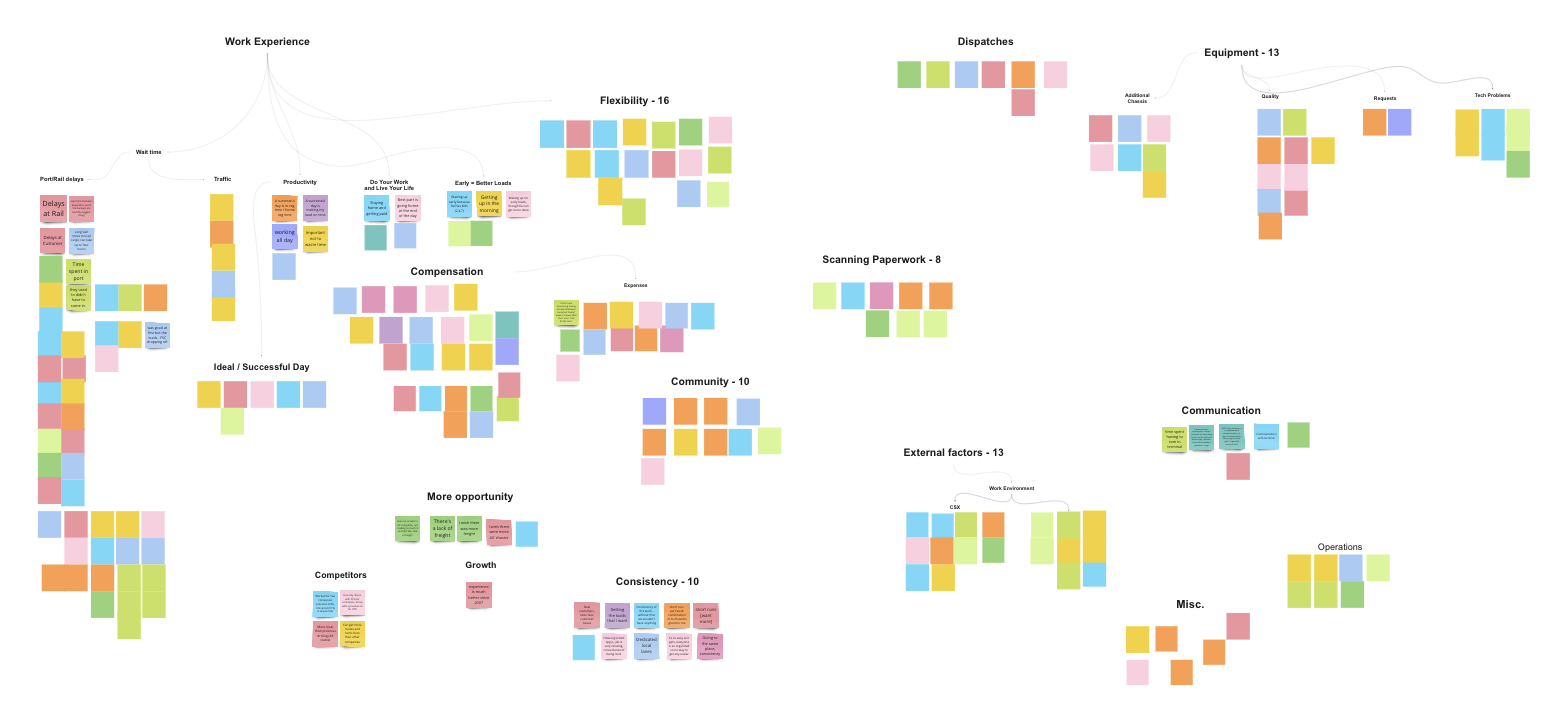
To distill the insights from these interviews, I employed a visual and collaborative approach using Miro, an online digital whiteboard. I transcribed the quotes and feedback onto individual post-it notes. I then grouped related quotes and themes together to identify common patterns and concerns.
Driver Themes & KEY INSIGHTS
Following synthesis of our research, six core themes consistently emerged across interviews, workshops, and stakeholder conversations. These insights represent the underlying factors that most strongly influence driver satisfaction, engagement, and retention. Together, they helped us prioritize what mattered most to drivers and informed the direction of the MVP.
Drivers experience waiting time as inefficient and frustrating, particularly when it limits their ability to complete jobs, earn more, or maintain momentum throughout the day. Downtime is closely tied to perceptions of productivity, fairness, and overall job satisfaction.
1
DOWNTIME
Drivers feel that current compensation rates lag behind competitors and do not adequately account for external factors such as detention time. Perceived inequities in pay directly impact trust, motivation, and long-term loyalty.
2
Fair Compensation
Greater flexibility and control over schedules contribute to higher satisfaction, fulfillment, and engagement. Drivers value consistency and the ability to make informed decisions about their workday.
3
Autonomy
Out-of-pocket costs, especially fuel, are a significant pain point. Drivers expressed frustration around expense coverage and a desire for clearer reimbursement structures that better reflect the realities of the job.
4
Expenses
Having reliable, well-maintained equipment is essential to doing the job safely and efficiently. Equipment availability and condition directly affect performance, confidence, and time on the road.
5
Equipment
Community
6
A strong sense of community fosters trust, commitment, and pride. Drivers are more likely to stay engaged when they feel supported and valued as part of a team rather than treated as a transaction.
Product Management
With clear priorities defined through research and synthesis, we shifted focus to execution, translating insights into a buildable, scalable product.
I partnered closely with engineering to define the MVP scope, balance technical constraints, and sequence delivery around the highest-impact driver needs. This included shaping requirements, refining user stories, and aligning stakeholders around a shared roadmap that supported both immediate value and long-term growth.
Development followed an iterative, feedback-driven approach. By working in close collaboration with developers, we validated assumptions early, adjusted based on feasibility and user feedback, and ensured the product remained grounded in real-world driver workflows.
The result was a thoughtfully scoped MVP that delivered meaningful functionality from day one while creating a flexible foundation for future enhancements.
THE SOLUTION
Our solution gave ContainerPort Group real-time access to financial and driver information while providing drivers with clear, day-to-day visibility into their work and earnings.